

The IPO window and the round number
SpaceX, OpenAI and Anthropic are walking through the same door at once. The door is the tell. The trillions are the question.
The chips are real and the demand is real. That was never the question. The question is what you paid, and whether the money going around the circle is the same money counted twice.
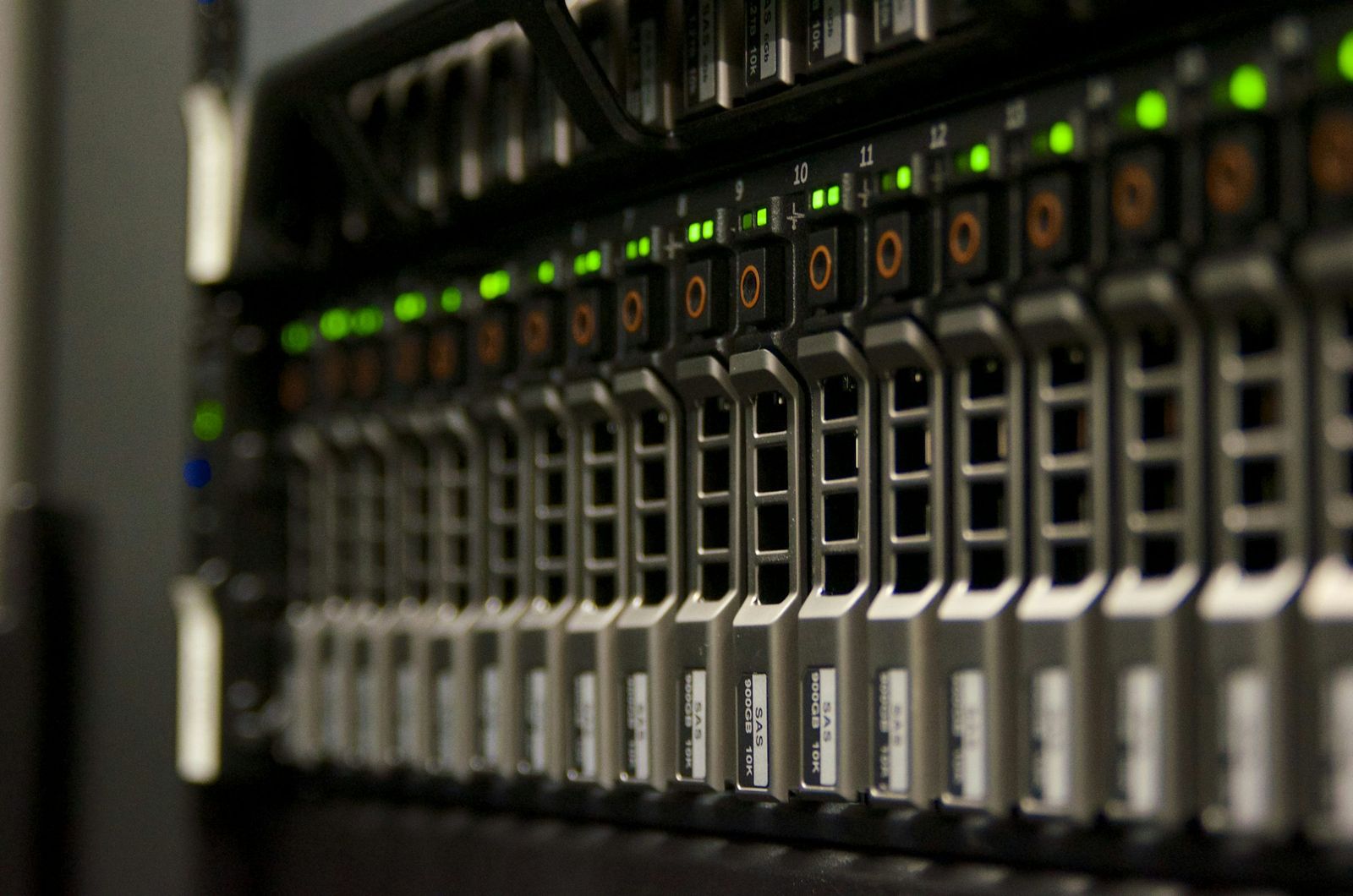
Photograph: Domaintechnik Ledl.net / Unsplash
"Is the AI buildout a bubble?" is the wrong question, and asking it badly is going to cost a lot of people a lot of money. There are two claims hiding inside the boom, and a bull market's favorite trick is to let the first smuggle in the second. The first claim is that the demand for computation is real, that the data centers will get built, that the technology is one of the genuine ones. The second claim is that the prices being paid for all of it are sane, and that the money financing it is real money rather than the same dollar walking in a circle waving at itself each time it passes. The first claim is almost certainly true. The second is where the trade lives, and the trade is not the technology.
I have a file I keep. It is labeled "this time is different," and I have heard the phrase in four distinct accents by now, and the useful thing I have learned about it is that it is usually half true. That is exactly what makes it dangerous. The internet really did change everything. The people who held pets.com to the end still lost their money. A great technology and a sane price are different claims, and conflating them is how a believer overpays for the weakest thing in the room while a skeptic shorts the strongest. So let us not conflate them. Let us separate the real thing from the trade built on top of it, and then let us talk about the round numbers, because there are a great many of them and they have all arrived suspiciously pre-rounded.
Start with what is not in dispute. The hyperscalers — Microsoft, Amazon, Alphabet, Meta — are on course to spend somewhere in the region of $600 billion of capital expenditure this year, the bulk of it on AI infrastructure, with roughly three-quarters of the aggregate pointed at compute rather than ordinary plumbing. Microsoft has guided to quarterly capex north of $30 billion, an annualized pace approaching $120 billion at a single company. Goldman Sachs has been tracking the assumptions underneath the build-out and arrives at a number with the word "trillions" attached, plural. These are not vapor figures. The chips exist. The buildings are going up. The power-purchase agreements are signed. Capital intensity at these firms now runs in the region of half of revenue, a ratio that would have been unthinkable for a software company a decade ago, and which tells you that something genuinely large is being attempted.
And the demand underneath it is not imaginary either. People use these models. Enterprises are wiring them into workflows. The usage curves are not the fictional hockey sticks of 1999, drawn by people who had never met a customer; they are real load on real silicon, which is why the silicon keeps selling out. When I tell you to be careful, I am not telling you the technology is fake. I have watched real things get built inside every mania I have covered. The fiber laid in the late nineties is still in the ground, still carrying traffic, having ruined nearly everyone who paid to lay it. That is the shape of the thing I am worried about. Not that nothing is real. That the realness is being used as a permission slip.
Now to the part that should make you sit up, which is the way the money moves. Nvidia has agreed to invest up to $100 billion in OpenAI, taking non-voting shares; OpenAI has in turn committed to deploying at least ten gigawatts of Nvidia systems. OpenAI has separately agreed to pay Oracle roughly $300 billion for compute over five years from 2027, and Oracle is raising tens of billions in debt to build the capacity to sell back to it. AMD handed OpenAI warrants for up to 160 million shares at a cent apiece, against the prospect of as much as $90 billion in hardware purchases. Broadcom is in for ten gigawatts of custom accelerators, an arrangement the press has tagged at around $350 billion. The supplier funds the customer; the customer uses the funding to buy from the supplier; the supplier books the revenue and the market rewards the supplier with a higher multiple, which lowers the cost of the capital it recycles back into the customer. Round and round.
The supplier funds the customer, the customer buys from the supplier, the supplier books the revenue. That is not a perpetual-motion machine. It is a circle, and a circle is just a line that has agreed to forget where it started.
Here is the precedent the consensus has agreed to forget, and it is not actually the dot-coms — it is the telecom equipment vendors of the same era, which is a sharper and less comfortable analogy. In the late 1990s Lucent and Nortel did exactly this. They lent their own customers the money to buy their own gear and booked the resulting orders as revenue. Lucent committed something on the order of $8 billion to vendor financing; the exposure ran to roughly a quarter of its revenue. When the customers could not pay — because the demand had been partly manufactured by the financing itself — the receivables went bad, the revenue reversed, and the stocks that had been the most-owned names in America went down by more than ninety percent. Nortel did not survive in any recognizable form. The fiber was still real. The accounting was the problem.
There is a word for this, and it is a better word than "bubble" because it is precise. The economist John Kenneth Galbraith coined "the bezzle": the sum of money that has been quietly misappropriated but not yet noticed, the gap between the moment a loss occurs and the moment it is discovered. During that interval — and it can be a long, pleasant interval — two people feel rich. The man who has been defrauded still believes he has his money, and the man who took it certainly has it. Galbraith's insight was that in a boom the bezzle swells, because nobody is checking, and in a bust it shrinks, because suddenly everybody is. Circular financing is a machine for inflating the bezzle. As long as the music plays, the supplier's revenue and the customer's compute and the market's multiple all feel simultaneously real. They are the same dollar, counted in three places, and everyone in the chain is booking it.
This is where Michael Burry re-enters the conversation, and credit where it is due — he asked the unfashionable question loudly in late 2025, which is roughly when you are supposed to ask it, not eighteen months early, which is my own specialty and a thing I will get to. Burry's argument is narrower and more technical than the headlines made it, and it is the more devastating for being narrow. It is about depreciation. The hyperscalers, he argues, are writing down their Nvidia GPUs over five and six years when the economic life of a chip on a two-to-three-year product cadence is far shorter. Stretch the assumed useful life and you shrink the annual depreciation charge; shrink the charge and you fatten reported earnings out of pure accounting. Burry put the cumulative understatement across the industry at roughly $176 billion between 2026 and 2028, and reckoned it could be flattering earnings at firms like Oracle and Meta by figures in the twenties of percent.
You do not have to take his exact numbers — I do not, and a back-of-the-envelope figure that arrives pre-rounded to $176 billion deserves the same suspicion as any other tidy number — to see the mechanism. If the chips wear out faster than the depreciation schedule admits, then a large slice of the profit the market is currently capitalizing at a rich multiple is not profit. It is a timing difference waiting to be caught up. The bezzle. And catch-up depreciation does not knock politely; it arrives all at once, in a quarter nobody scheduled, usually the quarter the financing circle has already started to wobble.
So let me be careful, because this is the discipline the lazy bears never bother with. Nvidia is not a bad company. It is one of the great companies of this or any cycle — the margins are extraordinary, the position is real, the product genuinely has no equal at the moment. None of that is the question. The question, as it always is, is what you pay, and whether the demand you are paying for is durable demand or demand the seller has financed into existence so it can book the sale. Those are different dollars even when they spend identically. A great technology and a sane valuation are separate claims, and the second one does not come free with the first.
Here is the part I am obliged to say, because being early is a way of being wrong and I refuse to launder it into being right. I have called two bubbles correctly and one about eighteen months early, and early cost real people real money while I was busy feeling vindicated in advance. So I will not tell you the date. I will only tell you what is priced. What is priced is that the demand is durable rather than financed, that the chips depreciate as slowly as the schedules claim, that the labs grow into commitments measured in the hundreds of billions before the cash runs out, and that the circle of financing is a flywheel rather than a closed loop. Each of those can be true. They are not, however, free; they are assumptions wearing the costume of facts, and the multiple has already paid full price for every one of them.
The technology is real. I want to be on the record about that, because the cynics will misread this and the believers will want to. Something large and genuine is being built, and a decade from now the compute laid down in this boom will still be doing useful work, the way the fiber still is. The question was never whether it was real. The question was always what you paid, and whether the dollar you were handed had already been counted somewhere else. Right now a great deal of money is going around a very tight circle, very fast, and everyone standing in the circle feels rich. The bezzle is at its maximum. It usually is, right before someone asks to be paid in something other than the next round.
SpaceX, OpenAI and Anthropic are walking through the same door at once. The door is the tell. The trillions are the question.

Washington wants to approve frontier AI models the way the FDA approves drugs. The analogy is comforting, popular, and wrong about how software actually fails. I say this as someone who would have been the agency.
A trillion dollars of concrete and silicon isn't a means to a plan. It is the plan — a bet, made with the balance sheet rather than the slogan, about who gets to decide.