
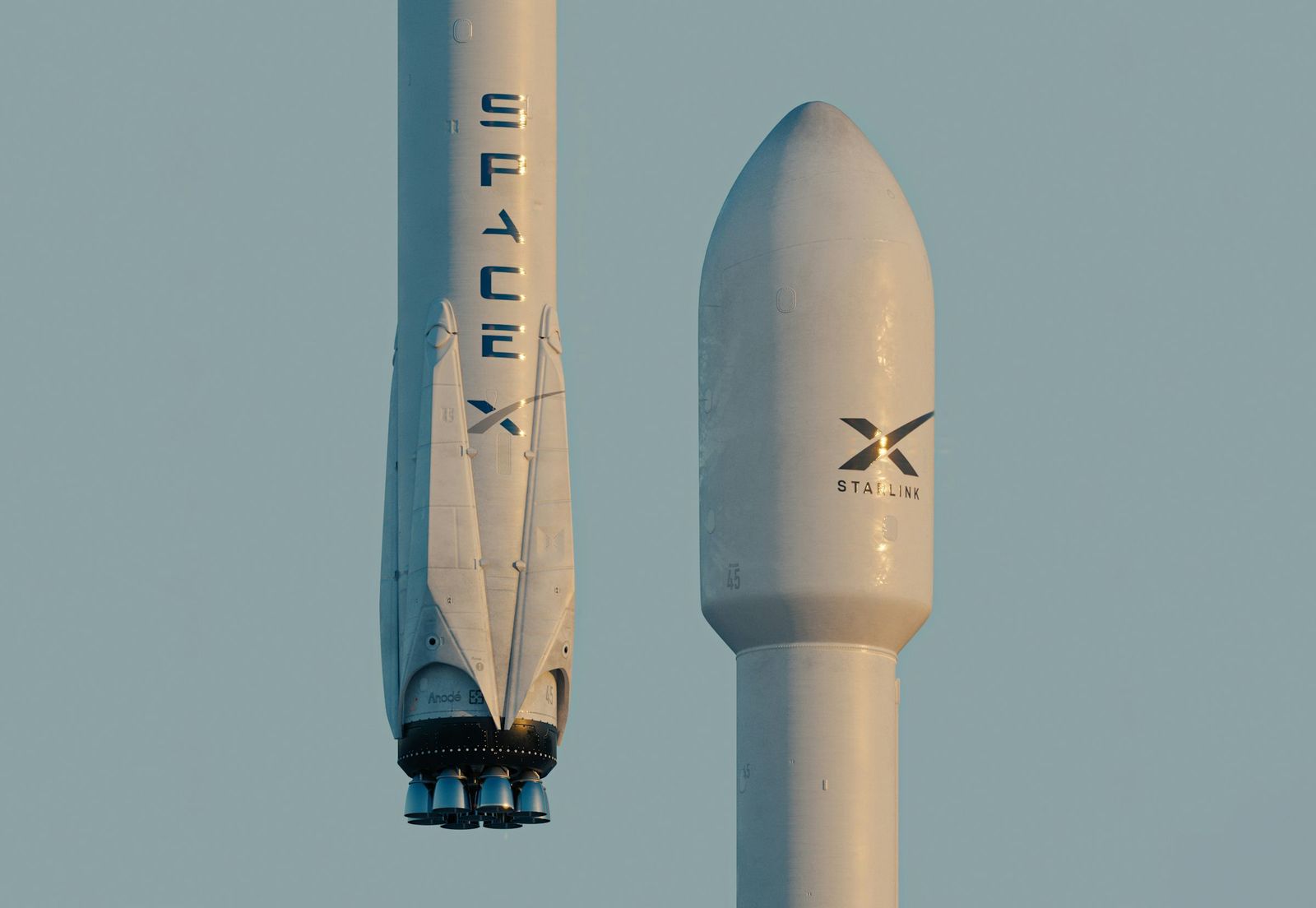
What SpaceX is really worth
The prospectus asks for $1.75 trillion and points at a rocket. Read the segments and the rocket is the loss leader — the company is an internet provider that happens to fly its own delivery trucks.
Commonwealth Fusion has applied to plug a 400-megawatt fusion plant into the grid. The reactor it depends on has not yet produced a single watt of net energy — and that is the whole story.
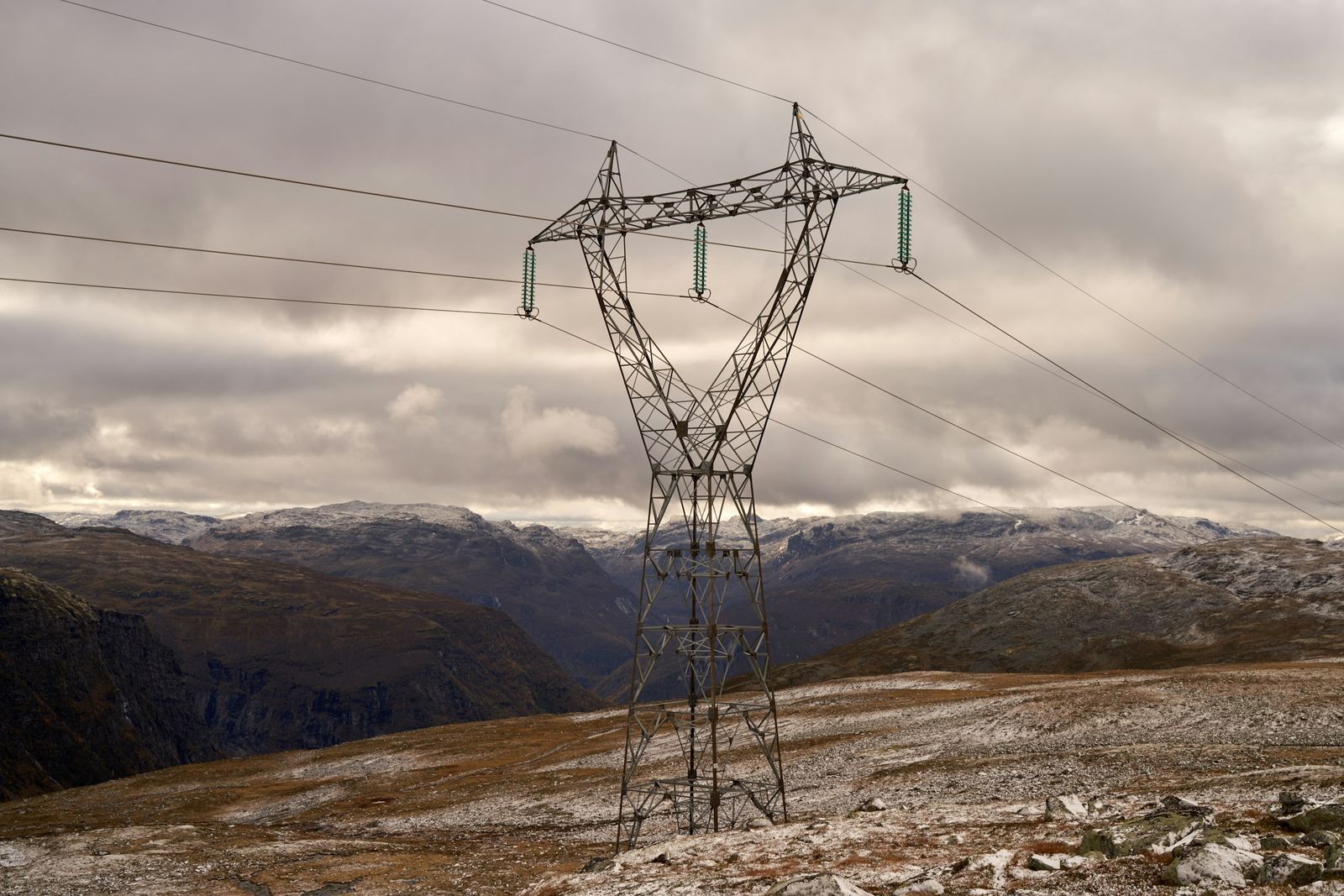
Photograph: Barnabas Davoti / Unsplash
On the last day of April, Commonwealth Fusion Systems did something no fusion company had ever done: it stood in the queue at a power company's door and asked to be plugged in. The application went to PJM Interconnection, the largest wholesale electricity market in the United States, which carries roughly 182,000 megawatts across thirteen states and the District of Columbia. CFS wants to add 400 of those megawatts from a plant it intends to build in Chesterfield County, Virginia, a site it has christened the Fall Line Fusion Power Station, after the geological seam where Virginia's Piedmont drops to the coastal plain and the James River breaks into rapids. It is a lovely name. It is also a name for a building that does not exist, attached to a reactor design that has never run, powered by a physics demonstration that has not yet happened.
I want to be precise about what is remarkable here, because it is genuinely remarkable, and because the remarkable part is not the part being sold. The act of joining an interconnection queue is, on its face, an act of bureaucratic patience. It is also the most honest thing about the announcement — far more honest than the press release wrapped around it. So let me take the two apart, the way my father took apart every claim before I had the words for it: this is real and important, and it will take longer than they are telling you.
A grid interconnection is not a plug. It is a multi-year engineering study in which the grid operator builds a simulation of its own network and asks what happens to it when you bolt 400 megawatts of new generation onto a particular node. Does the voltage hold? Do the protective relays trip correctly during a fault? What has to be rebuilt — substations, transformers, miles of conductor — and who pays for it? PJM runs these studies in clusters, and CFS itself says the process takes four to six years from application to the moment electricity could flow. That is the timescale of the paperwork alone. Bob Mumgaard, the company's co-founder and chief executive, framed the filing plainly: 'when you're serious about building a power plant in the early 2030s, you act now.' On that narrow logic he is correct. If you want to be connected by 2032, you do not start the queue in 2031.
So the filing is rational. It is also revealing, because it makes the timeline legible in a way the marketing never does. The grid does not care about your funding round or your offtake agreements. It cares about a study that takes half a decade, and that study is the easy half.
Here is the distinction that the entire story turns on. To date, exactly one facility on Earth has demonstrated that a fusion reaction can release more energy than was delivered to it: the National Ignition Facility at Lawrence Livermore, which did it in a single inertial-confinement pulse, in a laboratory, with a laser system that consumed vastly more wall-plug power than the reaction returned. That is a scientific milestone of the first order. It is not a power plant. No fusion device, anywhere, has yet produced net energy in a configuration that resembles a generator — let alone done it reliably, cheaply, and continuously for the thirty years a grid asset is expected to run.
CFS's own machine, SPARC, is the one that is supposed to close the most important gap. SPARC is a compact tokamak under construction in Devens, Massachusetts, built around the company's genuinely impressive 20-tesla high-temperature superconducting magnets — the technical advance that makes the whole bet plausible. By the company's accounting it was something over 65 percent complete in late 2025, with assembly and component testing underway. The goal is to make first plasma and then to demonstrate net energy gain, a fusion Q greater than one, on a target that has lived around 2027. SPARC is designed to show that the physics works at a useful scale. It has not shown it yet. As of this spring, the reactor that the Virginia plant's entire commercial case rests upon has produced no net energy at all.
A power plant that does it reliably for thirty years is a different problem from a single pulse in a lab — by orders of magnitude, and most of them are engineering, not physics.
The ARC plant proposed for Chesterfield is the generation after SPARC: a 400-megawatt commercial reactor meant to do continuously, and economically, what SPARC is meant to prove can be done at all. Between the two sits the hardest stretch of road in the field — the leap from a controlled demonstration to a machine that survives its own neutrons, breeds its own fuel, sheds its own heat, and does so on a maintenance schedule a utility can plan around. That is the leap no one has made. The grid application skips over it as though it were a formality.
What makes this filing more than a curiosity is that CFS has already signed contracts to sell the plant's output. Google, in July 2025, agreed to take 200 megawatts — half the plant — in what was billed as the largest fusion power-purchase agreement in history. Eni, the Italian oil and gas major, followed in September with an offtake deal valued at more than a billion dollars. Read the fine print on the Google arrangement and you find the tell: the agreement is anchored to SPARC achieving net energy. The deals are real money against an unrealized result. They are, in the strict sense, bets on a demonstration that has not occurred, for power from a plant that has not been built, delivered through a connection that has not been studied.
I do not think the people signing these deals are fools. A corporate offtake agreement contingent on a milestone is a way of buying a place in line and signaling demand for firm, carbon-free power, which is scarce and getting scarcer as data centers swallow load. Eni and Google can afford the option, and the option costs them little if the physics arrives late. The question is what the public is meant to take from the sequence of announcements — first a grid filing, then the framing that a fusion plant is 'coming to the grid,' as though connection were the obstacle and the reactor a settled matter.
This is the question I always end up asking out loud, because it is the one the announcements are built to keep you from asking. On what timescale? Stack the dependencies in order. SPARC has to make first plasma. It then has to reach net energy gain, currently targeted for 2027, a date that has already drifted from earlier promises of operations beginning in 2026. The ARC design has to be finalized and the engineering proven — the materials science of a continuously operating reactor is not a solved problem, and Ed Morse, a nuclear engineer at Berkeley, put the physics worry bluntly to MIT Technology Review last year: 'What I'm not seeing is a peer-reviewed scientific article that makes me feel like, boy, we really turned the corner with the physics.' Construction in Chesterfield would have to begin, by CFS's own estimate, around 2027 or 2028. And running alongside all of it, the grid study that takes four to six years. The plant is slated for the early 2030s. Every one of those milestones has to land, in sequence, on time, for that to hold.
I keep a private archive of fusion's deadlines — 'within ten years' has stayed a constant ten years away for most of my lifetime — and I am not interested in using it to sneer. The honest version is more interesting than the cynical one. CFS has done real, hard, demonstrable things: the magnets are not vaporware, SPARC is steel and superconductor in a building in Devens, and entering the interconnection queue is exactly what a company serious about the 2030s ought to do. The criticism is not that the work is fake. It is that the announcement compresses a chain of unproven steps into the shape of an imminent product, and that a grid filing — the one part of this that is genuinely procedural — is being used to make the reactor sound finished.
There is a version of this story that is straightforwardly admiring, and you will read it elsewhere this week: first fusion company to apply for grid connection, marquee customers, a poetic name, clean firm power on the way. All of that is true and none of it is the measure. The measure is a single number that does not exist yet — the net energy gain SPARC is built to produce and has not produced. Until that number is on a chart that other physicists can check and reproduce, everything downstream of it is announced, not demonstrated, however many megawatts have been spoken for and however many states the grid crosses.
So I will hold both truths, because the science deserves both. Commonwealth Fusion may well be the company that finally makes a tokamak pay, and if it does, the patience of starting the grid study now will look like foresight. But a queue position is not a kilowatt, a contract is not a reactor, and a name on a riverbank is not a power plant. They have applied to connect a building to the grid. The building's reason for existing has not yet worked. That gap — between the thing announced and the thing demonstrated — is not a detail to be hurried past. On the long timescales this field actually runs on, it is the only thing worth watching.
The prospectus asks for $1.75 trillion and points at a rocket. Read the segments and the rocket is the loss leader — the company is an internet provider that happens to fly its own delivery trucks.
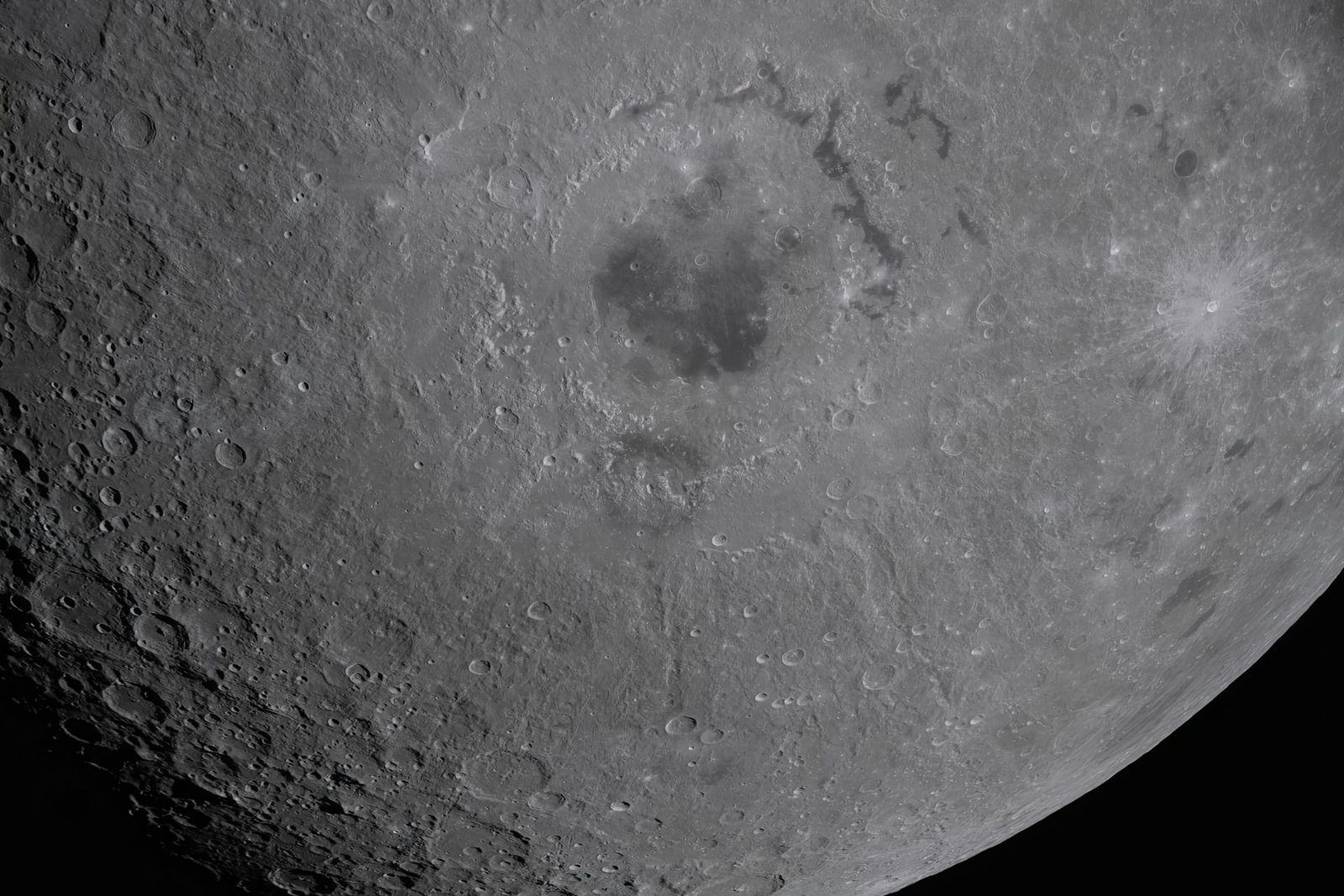
Starship V3 made a fiery splash in the Indian Ocean and Elon Musk called it epic. The number that matters is dollars per kilogram to the lunar south pole — and that number is still doing the heavy lifting NASA's renderings won't.
Thea Energy’s oversubscribed Series B is real money for a real machine. The interesting question is what the money is actually buying — and on what timescale.