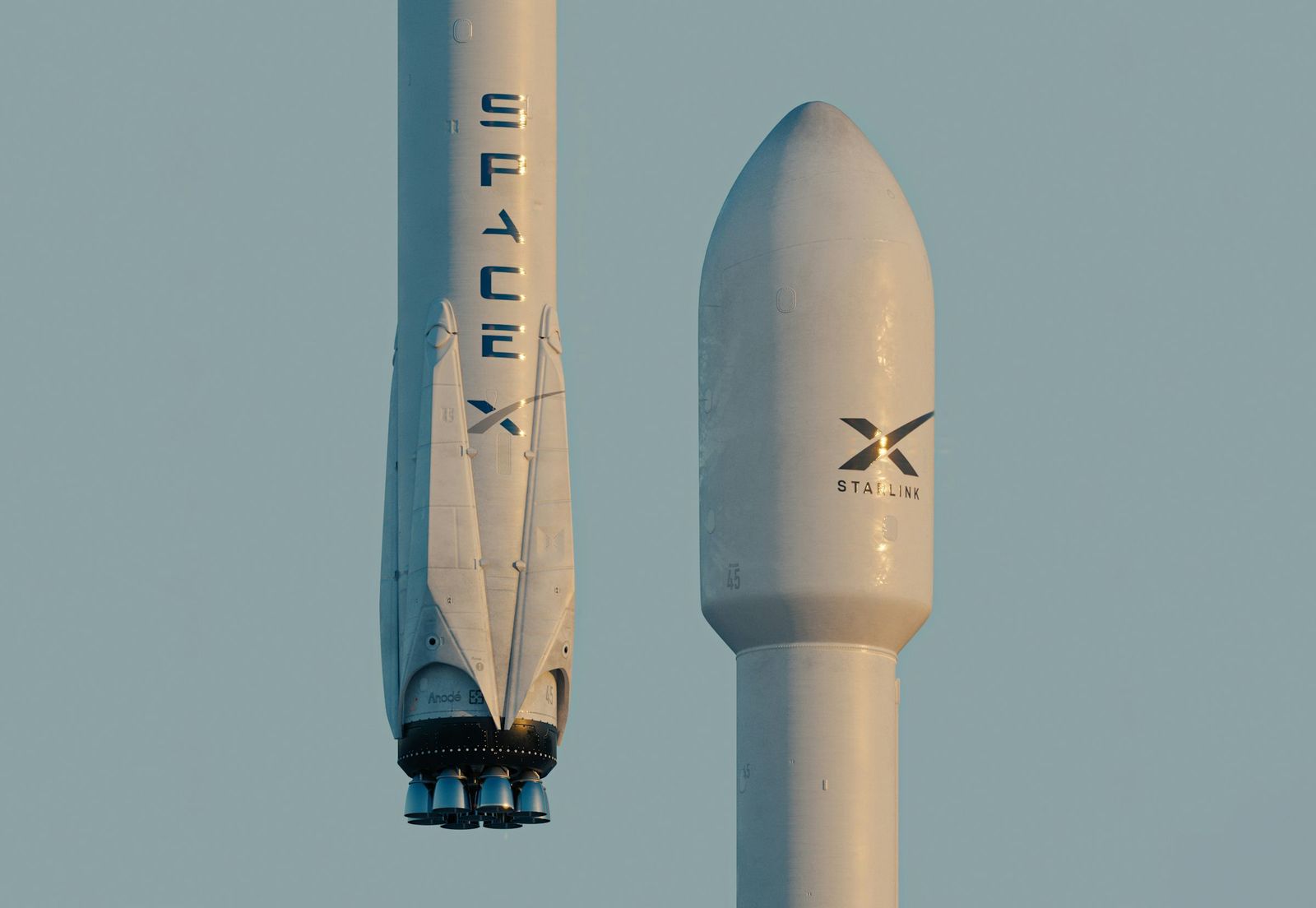
On Friday, May 22, a 408-foot stainless-steel tower lifted off the southern tip of Texas, carrying twenty mock Starlink satellites it released about halfway through an hourlong flight. This was Starship V3, the biggest, most powerful version yet, and the cameras did what cameras do. They filmed the flame. The number that actually mattered that week was not the 18 million pounds of thrust. It was 1.75 trillion dollars — the valuation Space Exploration Technologies Corp. is reaching for in a preliminary prospectus filed with the SEC on May 20, ahead of a mid-June listing on the Nasdaq under the ticker SPCX.
The timing was not an accident. You launch the rocket before you sell the stock because the rocket is the story everyone wants to buy. But the prospectus is a spreadsheet, and the spreadsheet tells a different story than the launch pad does. Read the segments and the rocket turns out to be the part of the business that loses money. The part that makes money sits in orbit, beams internet, and charges by the month. The interesting question about SpaceX is not whether Starship flies. It is whether an internet company that flies its own delivery trucks is worth roughly 100 times its revenue.
The number, and what it's a multiple of
Start with the figure being asked for. SpaceX reported $18.67 billion in consolidated revenue for 2025, up from about $13.1 billion the year before — real growth, the kind that justifies a premium. A $1.75 trillion valuation against that revenue is a multiple of roughly 94 times trailing sales. Bloomberg has since reported the company nudging its target above $2 trillion, which would push the multiple past 100. For comparison, a mature, profitable software company trades in the single digits to low double digits on revenue. SpaceX is being priced like a hyperscale platform that has already won, on the year it lost money.
Because it did lose money. The same filing shows a 2025 GAAP operating loss of about $2.59 billion and a net loss closer to $4.9 billion once you fold in capital spending, stock compensation, debt, and the AI losses that arrived with the company's February acquisition of xAI. Adjusted EBITDA was a healthier $6.58 billion, which is the number the bankers will put on the slide. The gap between those two figures — call it the distance between the EBITDA on the roadshow and the loss in the footnotes — is most of what an investor is being asked to take on faith.
Where the money actually is
Split the company into its three reported segments and the follow-the-money exercise gets uncomfortable fast. In 2025, the launch-and-spacecraft business — Falcon, Dragon, the thing with the flame — booked about $4.09 billion in revenue. The connectivity business, which is Starlink, booked $11.39 billion, roughly 61 percent of the total. The AI segment, mostly xAI, added about $3.2 billion. By the first quarter of 2026, Starlink's share had climbed to about 69 percent of a $4.69 billion quarter.
Now look at which of those segments earns. Per Morningstar's read of the S-1, in Q1 2026 the launch segment lost about $662 million and the AI segment lost about $2.47 billion. Starlink was the only division in the black, throwing off operating income of around $1.19 billion in the quarter and roughly $4.4 billion for 2025. That is the whole company in one line: Starlink makes the profit, and the profit pays for the rockets and the AI. The launch business everyone is buying the stock to own is, on paper, a cost center.
The launch business everyone is buying the stock to own is, on paper, a cost center. Starlink is the company; the rocket is its in-house logistics line.
The rocket is a logistics line
Here is the detail that reframes everything. SpaceX flew roughly 165 orbital launches in 2025. Only about 43 of those were for paying external customers. The other 122 were deploying Starlink satellites — the company launching its own payloads, for its own constellation, to grow its own subscriber base. The most capable launch provider in history is now mostly flying for one customer, and that customer is itself.
This is the part the renderings hide. A reusable first stage did not change any law of physics that wasn't understood in the 1960s; it changed an accountant's assumption — that the most expensive piece of the rocket burns up on every flight. SpaceX drove the cost per kilogram down far enough that launching its own internet satellites by the hundred stopped being a moonshot and became a line item. A standard Falcon 9 flight runs around $62 million, and the company claims five-to-ten times lower cost per ton than its rivals, partly because it builds about 70 percent of the Falcon 9 in-house and makes radios for $5,000 that the industry buys for $100,000. Cheap launch is the moat. But the moat exists to serve the constellation, not the other way round. The launch business is valuable to SpaceX the way a trucking fleet is valuable to a retailer: it lowers the cost of the thing that actually sells.
Read the Starlink numbers like an operator, not a fan
If Starlink is the company, then the company's growth story has to survive a closer look. The subscriber line is genuinely spectacular: about 10.3 million Starlink subscribers as of the end of Q1 2026, up from roughly 5.0 million a year earlier, across some 160 countries. Connectivity revenue grew about 48 percent in 2025 and operating income reportedly jumped about 120 percent. That is a real, profitable, fast-scaling utility, and it is the legitimate core of the valuation.
But operators watch the per-unit economics, and those are softening. Average revenue per subscriber fell about 18 percent between 2023 and 2025, to roughly $81 a month, and the S-1 expects it to keep declining as Starlink pushes into lower-priced plans and lower-income markets to chase volume. That is a deliberate trade — more subscribers, less revenue each — and it is the right move for a network business hunting scale. It also means the top line grows slower than the subscriber count, and the easy, high-paying North American customers are increasingly behind it. The question a $1.75 trillion price tag has to answer is whether the next 10 million subscribers are as profitable as the last 10 million. The ARPU trend says: not quite.
What you're actually underwriting
There is also the matter of what comes bundled. The xAI merger means buying SpaceX now means buying an AI company that lost about $2.47 billion in a single quarter, folded into the same ticker. The prospectus gestures at a $28.5 trillion total addressable market — it calls it 'the largest actionable total addressable market in human history' — and floats AI-compute satellites launching from 2028. That is the sentence to be wary of. In this author's experience, when a business case reaches for a number that large and that far out, it is doing the work that current cash flow can't. Inspiration is doing the lifting where margin should be.
None of this means the valuation is wrong, exactly. A genuine near-monopoly on Western orbital launch — roughly 85 percent of U.S. orbital launches in 2025 — combined with the only profitable space-internet utility at global scale, is a rare asset, and rare assets get scarcity premiums. The voting structure hands Elon Musk about 85 percent of the vote, so you are also buying his judgment, on his terms, with no real say. Whether that is a feature or a risk depends on the next decade going the way the slide says.
Does the math close?
So price the payload. Strip away the flame and the prospectus describes a company whose profit comes almost entirely from a satellite-internet subscription, whose famous rocket business is mainly an internal delivery service for that subscription, whose newest segment is a multibillion-dollar quarterly loss, and whose headline valuation runs near 100 times a revenue base that posted a net loss last year. The bull case is that cheap launch plus a scaling utility plus a generational TAM compounds into something that grows into the number. The bear case is simpler: you are paying a platform multiple for a hardware-heavy business that makes money in one of its three rooms.
Starship V3 will keep flying, and it should — falling cost per kilogram is the most important thing happening in space, full stop. But the IPO is not a vote on the rocket. It is a bet that an internet company can keep subsidizing its own launches and its own AI long enough for all three to pay off at once. The launch was a spectacle. The spreadsheet is the story. And on the spreadsheet, the math does not close yet — it asks you to believe it will.